
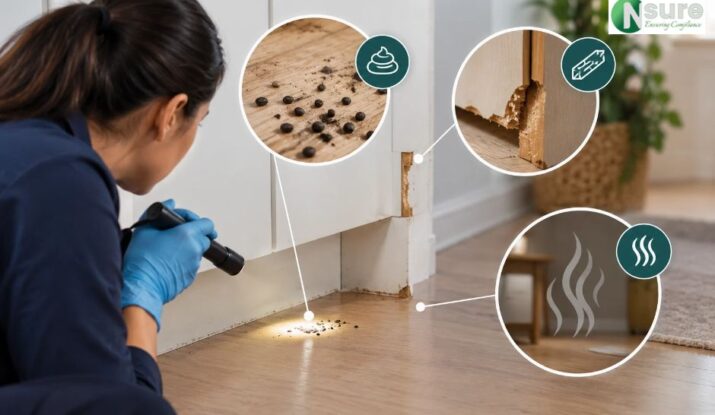
A majority of pest problems never begin with seeing the pests. They start much earlier – in the form of signs left behind by pests as they continue their destructive activity. The traces include pest droppings, damage to property or belongings, and unusual odours that you may have never noticed before. Early identification of the signs can play an extremely important role because it gives you the opportunity to prevent further damage caused by the pests as well as to avoid bigger expenses on treating pests in the future.
Unfortunately, such signs are often ignored. Small droppings, odours, and traces left by pests can easily be missed. This can prevent you from identifying the type of pest involved, which may lead to poor decisions and more serious problems later. Identifying these signs and taking measures to fix the problem as soon as possible is always preferable to ignoring it. In this blog, we discuss the common signs left by pests, how pest droppings, damage, and odours can help identify an infestation, and what these signs may indicate.
What Pest Droppings indicates?
Droppings tend to be the most evident sign. Their size, consistency and location can often tell you a great deal about the pest.
Rodents: Mouse droppings are small, dark and pointed at both ends, similar to the size and shape of a rice grain. Rat droppings are bigger and thicker. Fresh droppings will appear dark and moist while older ones appear grey and dry.
Cockroaches: Small cockroach species such as German cockroach leave behind black specks that look similar to ground pepper. Bigger species leave behind small cylindrical pellets. Check behind the sink, fridge, or cabinet corners.
Bed bugs: Look out for tiny dark spots or rusty stains on the bed, the mattress seams or the bed frame.
Termites: Tiny, sawdust-like pellets in the vicinity of wooden furniture, door frames or skirting boards are a sure sign of termites.
The location can also show evidence of pest activities. A few clustered droppings in a spot can be an indication of nesting sites nearby, while smeared trails of droppings along a wall can indicate the regular trail of a pest.
Signs of Damage to Look For
- Gnawed marks on wood, boxes, electrical wires or cabling is usually an indicator of rodents. Chewing on wiring can also cause electrical faults and fire hazards.
- Torn up paper or fabric stuffed in the corner of a room or behind furniture can be a sign of a rodent nest.
- Greasy smear marks along the skirting boards are caused by rodents constantly running along the same path.
- Hollow-sounding wood, mud tubes or blistered paint are potential signs of termites.
- Tiny holes on the packet of food indicate the presence of a rodent or a pantry insect.
- Itchy red bites in a line or cluster, together with a sleepless night, can indicate the presence of bed bugs.
What Odours Can Tell You?
Smells are not always easy to notice, but they can be an additional indicator of the type of pest.
- Rodents emit a pungent ammonia-like odour from their urine. A rotting smell indicates the possibility of dead rodents in the walls or ceiling.
- Cockroaches have an oily, musty odour that becomes more intense with larger infestations.
- Bed bugs can also emit a musty, sweet scent in the bedroom, usually with a heavy infestation.
- Termites are sometimes associated with a damp, mouldy smell of wood.
Why these signs are more relevant in Dubai?
The extreme heat combined with the cooler air-conditioned apartments in Dubai, create a perfect breeding ground for pests that prefer temperate climates. The proximity of multiple apartment blocks sharing common walls, ducts and pipes make it easier for these pests to spread between neighbouring units. A pest infestation in a single unit can be enough to call for an inspection in the adjoining units as well. Residents looking for pest control services in Dubai often face the challenge of treating the whole block or building if the infestation has already spread between units.
What to do when you see the signs?
Make sure to note down and document your findings together with the time and place where you saw the signs. This will assist the technician to identify the pest faster. You should also conduct a thorough cleaning, while also wearing a mask and gloves. Clean up any droppings you see with a damp tissue or cloth, and use a disinfectant to kill the germs. Avoid sweeping them away with a dry cloth or dustpan as this can cause spores to become airborne.
Make sure to get rid of any food sources by keeping your kitchen and pantry clean and try storing food in airtight containers. Seal any cracks and crevices around the place, particularly near electrical switches and plumbing. Avoid buying over the counter cockroach killers or bed bug sprays. While they can help eliminate some pests, such as flying cockroaches and bed bugs, they can also cause more severe infestations as the remaining bugs have to go somewhere.
When to get a professional inspection?
It is time to book a professional inspection and treatment if you continue to find droppings despite cleaning. A professional pest inspection can identify the type and source of the infestation, and recommends a suitable treatment.
Ensure that the pest control service you hire is licensed by Dubai and Sharjah Municipality and utilise licensed chemicals by the Ministry of Environment and Climate Change. Our team provides inspection-based residential pest control services across Dubai, including pest control discovery gardens, with home and office inspections and eco-friendly treatments for domestic and commercial properties. If you have noticed any signs of a pest infestation, we recommend you contact us on +971 50 968 0885 for a prompt professional inspection and treatment. We are available 24/7.